Sunday, September 20, 2009

Collapse: How Societies choose to fail or survive -by Jared Diamond

harga sebelum ongkos kirim Rp. 158,000


http://en.wikipedia.org/wiki/index.html?curid=1378709
Collapse: How Societies Choose to Fail or Succeed (also titled Collapse: How Societies Choose to Fail or Survive) is a 2005 book by Jared M. Diamond, professor of geography and physiology at University of California, Los Angeles. Diamond's book deals with "societal collapses involving an environmental component, and in some cases also contributions of climate change, hostile neighbors, and trade partners, plus questions of societal responses" (p. 15). In writing the book Diamond intended that its readers should learn from history (p. 23).
Contents
[hide]

* 1 Synopsis
* 2 Book structure
* 3 Reviews
* 4 Similar theories
* 5 See also
* 6 References
* 7 External links

[edit] Synopsis

In the prologue, Diamond summarizes Collapse in one paragraph, as follows.
“ This book employs the comparative method to understand societal collapses to which environmental problems contribute. My previous book (Guns, Germs, and Steel: The Fates of Human Societies), had applied the comparative method to the opposite problem: the differing rates of buildup of human societies on different continents over the last 13,000 years. In the present book focusing on collapses rather than buildups, I compare many past and present societies that differed with respect to environmental fragility, relations with neighbors, political institutions, and other "input" variables postulated to influence a society's stability. The "output" variables that I examine are collapse or survival, and form of the collapse if collapse does occur. By relating output variables to input variables, I aim to tease out the influence of possible input variables on collapses. ”

—page 18

Diamond lists eight factors which have historically contributed to the collapse of past societies:

1. Deforestation and habitat destruction
2. Soil problems (erosion, salinization, and soil fertility losses)
3. Water management problems
4. Overhunting
5. Overfishing
6. Effects of introduced species on native species
7. Overpopulation
8. Increased per-capita impact of people

Further, he says four new factors may contribute to the weakening and collapse of present and future societies:

1. Human-caused climate change
2. Buildup of toxins in the environment
3. Energy shortages
4. Full human utilization of the Earth’s photosynthetic capacity

Diamond also writes about cultural factors, such as the apparent reluctance of the Greenland Norse to eat fish.

The root problem in all but one of Diamond's factors leading to collapse is overpopulation relative to the practicable (as opposed to the ideal theoretical) carrying capacity of the environment. The one factor not related to overpopulation is the harmful effect of accidentally or intentionally introducing nonnative species to a region.

Diamond also states that "it would be absurd to claim that environmental damage must be a major factor in all collapses: the collapse of the Soviet Union is a modern counter-example, and the destruction of Carthage by Rome in 146 BC is an ancient one. It's obviously true that military or economic factors alone may suffice" (p. 15).

Ecologic : Truth and Lies of Green Economics -by Barton Clegg

harga sebelum ongkos kirim: Rp. 159,800


http://www.brianclegg.net/ecologic.html
Looking after the environment should be a no brainer.


No one wants to destroy the world, yet at every turn mankind fails to take essential steps to prevent the destruction of our planet – or we’re deceived, often by ourselves. So why can’t experts agree on the remedies? Why is so much green rhetoric a response to scares rather than the real issues?

Taking the scalpel of ecologic, that is sound reasoning, economics and human psychology, to everything from carbon trading to organic food to charity fundraisers, author Brian Clegg opens up the reality beneath the layers of confusion and manipulation to expose what is truly green and what is simply greenwash.


So why can’t the experts agree? Why do polls tell lies? Why is fairtrade unfair? Why is so much green rhetoric a response to scares rather than green issues? And why do we fail to balance reward and risk?


v Reviews v

This book crackles. Every paragraph pits your heart against your head. Those with green sensibilities and a nervous disposition may have a cardiac arrest. But the rest of us will have our synapses set alight.

Futurecast 2020 -by Robert Shapiro

harga sebelum ongkos kirim: Rp. 103,200

Futurecast: How Superpowers, Populations, and Globalization Will Change the Way You Live and Work by Robert J. Shapiro. St. Martin’s Press. 2008. 358 pages. $26.95.

Three powerful global forces are currently reshaping humanity’s near-term future, writes former U.S. Undersecretary of Commerce Robert J. Shapiro in his new book Futurecast. These forces are globalization, an aging world population, and America’s unchallenged position as the world’s sole military superpower. Analyzing them, Shapiro creates a “global blueprint” that charts the likely course of the planet over the next decade and a half.

Most of the discussion revolves around the impact of globalization, which Shapiro believes will produce the greatest amount of change, as it breaks down barriers and opens up economies. He argues that the United States (along with the rest of the world) has no choice but to embrace globalization, despite its drawbacks and limitations. In fact, globalization will ultimately favor the United States and China, while creating much greater economic challenges for Europe and Japan (whose economies are significantly less productive overall). Indeed, the economic futures of America and China are intrinsically linked, for better or for worse, now that China has emerged as an economic superpower. One reason for this connection is the seemingly endless shift of production jobs to China, which provides a seemingly endless supply of low-skilled, low-wage workers.

“A decade from now, America will still be the world’s largest and most technologically advanced economy, and the one with the greatest impact on everyone else,” Shapiro writes. “But nothing will stop globalization from destroying job security for millions of Americans, along with their European and Japanese counterparts.” By the year 2020, the vast majority of manufacturing jobs will have permanently relocated to the developing world.

Shapiro reminds the reader that China’s economy is more than three times what it was 15 years ago, and he believes that its rapid economic ascension will continue unabated, as China has now become a key trading partner attractive to foreign investors. However, China’s economic growth may be happening too quickly. The rest of the country is struggling to keep up with the changes, including implementing key environmental and product safety regulations. Also, the vast majority of the workers who contribute to the growing economy remain greatly impoverished. Due to these struggles, China’s economic success is not guaranteed. Shapiro argues that China needs a more liberal political system to manage its liberalized economic system—conditions that are already in place in the United States. Shapiro also disagrees with the view that India will soon emerge as an economic force, and labels India “still a backward economy decades away from global economic influence.”

Longer Lives, Smaller Families

In addition to globalization, Shapiro also notes that an unprecedented shift from large families with short life-spans to small families with significantly longer life-spans is currently taking place across the globe. In Japan, “the median age will hit fifty by 2020.” Population change is something that can’t be legislated or regulated, Shapiro argues, and the economic ramifications of the shift will be felt everywhere. Labor forces will contract and economic growth will be stymied, the vast number of retirees will create a financial crisis for government pension programs in virtually every country that has them, the standard of living will drop, and taxes will increase sharply. The global health-care crisis will inevitably extend to China, where approximately 80% lack medical care: “For the nearly 80% of Chinese without insurance or the private means to pay, doctors won’t see them and hospitals won’t admit them, regardless of how sick or injured they are.” New technologies will only drive up the cost of medical care, which “inevitably will create enormous social and economic stresses in every major country over the next ten to fifteen years,” Shapiro writes.

While the U.S. will likely remain the dominant superpower with no direct challengers, Shapiro finds that the threat of terrorism is one of two wild cards that have the potential to unpredictably alter the projected future outcome. He analyzes what effects different terrorism scenarios might have on the new global economy before briefly identifying different means of technological advancement (the other wild card), including nanotechnology, biotechnology, and information technologies, and their effect on the market as well.

The passages discussing climate change expose the one major weakness of the book, however, for Shapiro doesn’t devote much of his powerful analytic skills to an in-depth discussion of the impact of global warming. Instead, he optimistically foresees nanotechnological breakthroughs leading to clean energy, making climate change a “manageable problem,” without elaborating much on what that implies. The topic requires more thoughtful analysis.

Shapiro’s writing style lacks the colloquial, hand-on-your-shoulder approach of award-winning journalists who have tackled similar subject matter, but when he delves into the specifics of the new global economy, his prose is engaging, and infused with real energy. At times repetitive, Futurecast would be more effective if it were more concise, but it succeeds in giving the reader a sophisticated awareness of many of the major challenges and unexpected developments in store for us within the next 15 years.

Billion Dollar Lessons by Paul B Carroll and Chunka Mui

harga sebelum ongkos kirim: Rp. 165,200

Billion-Dollar Lessons

What You Can Learn from the Most Inexcusable Business Failures of the Last 25 Years

By: Paul B. Carroll, Chunka Mui

Published: Sept 11, 2008
ISBN: 9781591842194
Format: Hardcover, 320pp
Publisher: Portfolio


Business books routinely look at successes and suggest how to emulate them. But no one looks at failures and lays out methods for how not to emulate them, write Paul B. Carroll and Chunka Mui in their ground breaking book Billion-Dollar Lessons: What You Can Learn from the Most Inexcusable Business Failures of the Last 25 Years. The authors turn the theory of good to great upside down. By focusing on how to avoid going from good to disaster, the book is the definitive textbook, for avoiding misguided strategies that lead to business failure.


Paul B. Carroll and Chunka Mui (photo left) recognize that business failure is caused as much by human behavior as by overall economic conditions. In fact, the authors highlight how flawed human nature, including hubris, failing to listen to advice, or herd instinct, lead to serious strategic errors. The book demonstrates, through detailed case studies, how otherwise strong companies embarked on disastrous courses of action. The mistakes are many, and the authors have examples of the most common strategic failures. At the same time, the authors offer a series of alternative approaches to developing business strategy, designed to prevent the fatal decision in the first place.


Paul B. Carroll (photo left) and Chunka Mui provide a nine point list of potential strategic mistakes, and document them in their company studies section. Each of the case studies is an object lesson in what mistakes led to the corporate failures. The flawed decision making process, that resulted in each failed action, is well analyzed as a teaching tool for executives of all levels. Not only are failures described, but the authors offer many powerful tools for improving decision making in other organizations. The techniques are devised to prevent human nature from leading to the same failed actions in the future.

For me, the power of the book is two fold. The authors provide well written, and incisive analysis, of seven categories of failed strategic actions. The mistakes made by the companies are powerful examples of how bad decisions can take on a life of their own, and effectively derail a corporation. The second power of the book is its practical solutions to the human nature and corporate culture problems that led to the failures in the first place. Through various methods shared by the authors, flawed systemic thinking can be replaced by stronger decision making at all levels. This book is destined to become a classic in the field of corporate strategy and decision making.

I highly recommend Billion-Dollar Lessons: What You Can Learn from the Most Inexcusable Business Failures of the Last 25 Years by Paul B. Carroll and Chunka Mui to any business executives who are serious about avoiding the mistakes that have led other companies to ruin. Along with the case studies in failure, the astute business person will learn powerful techniques for making the right strategic choices in the future.

Read Billion-Dollar Lessons: What You Can Learn from the Most Inexcusable Business Failures of the Last 25 Years by Paul B. Carroll and Chunka Mui, and learn from the disastrous experiences of others, about how bad strategies and flawed decision making can lead a company to downfall. Avoiding mistakes will help any company take advantage of the right opportunities when they arise.

A New Earth - Create a better Life by Eckhart Tolle

harga sebelum ongkos kirim: rp. 206,400


Are You Ready to be Awakened?
Eckhart Tolle and Oprah
Millions have experienced Oprah and Eckhart's A New Earth classes. They're transforming their lives and so can you. Dive in right now and start watching the online classes. Or, become a member of Oprah.com and join Oprah's Book Club—you'll gain access to your personal workbook, an exclusive newsletter, talk with other readers, and more!

n A New Earth, spiritual teacher and author Eckhart Tolle (The Power of Now) advocates present moment awareness and the dismantling of the ego as the path towards awakened living. A New Earth gets its title from a Bible verse referring to the rising of "a new heaven and a new earth." According to Tolle, "heaven" is the awakened state that will bring about "a new earth" in the outer world, the world of form.

Tolle begins with an extensive description of our principal barrier to the awakened state: ego. He indicts the word "I" as being a terrible feat of reductionism, as it infinitely minimizes who we truly are by allowing us to identify ourselves with our mind, our gender, our accumulated possessions, our social roles, and so on. He then informs us that the only way to diminish ego is by seeking the fullness of life in the present moment, that by making friends with the Now, we can destroy our time-bound state of consciousness and therefore destroy ego. Focus on the Now is focus on Being q rather than Doing, on presence rather than form:
"People believe themselves to be dependent on what happens for their happiness, that is to say, dependent on form. They don't realize that what happens is the most unstable thing in the universe. It changes constantly. They look upon the present moment as either marred by something that has happened and shouldn't have or as deficient becuse of something that has not happened but should have. And so they miss the deeper perfection that is inherent in life itself, a perfection that is always already here, that lies beyond what is happening or not happening, beyond form."
Tolle goes on to assert that awakening to the abundance that is already in one's life is the foundation for all abundance available, that abundance and scarcity are actually inner states. He cites examples from varying traditions - Christian, Zen, and Hindu - to assert the perfection of the Now, a concept that is as thematically central to this book as it was in The Power of Now.
Tolle presents A New Earth as a vehicle to bring about a shift in consciousness, though he repeatedly admits that he can only awaken those who are ready for such a transformation. He tells his readers that if they indeed find something within his book that resonates with them, then the shift has already begun, and they are on the path. With millions of Oprah's Book Club members picking up copies of A New Earth, that path will doubtlessly become a road most traveled.

Blink -by Malcolm Gladwell

harga sebelum ongkos kirim rp. 154,800

Blink: The Power of Thinking Without Thinking is a 2005 book by Malcolm Gladwell. It popularizes research from psychology and behavioral economics on the adaptive unconscious; mental processes that work rapidly and automatically from relatively little information. It considers both the strengths of the adaptive unconscious, for example in expert judgment, and its pitfalls such as stereotypes.
Contents
[hide]


The author describes the main subject of his book as "thin-slicing": our ability to gauge what is really important from a very narrow period of experience. In other words, spontaneous decisions are often as good as—or even better than—carefully planned and considered ones. Gladwell draws on examples from science, advertising, sales, medicine, and popular music to reinforce his ideas. Gladwell also uses many examples of regular people's experiences with "thin-slicing."

Gladwell explains how an expert's ability to "thin slice" can be corrupted by their likes and dislikes, prejudices and stereotypes (even unconscious ones), and how they can be overloaded by too much information. Two particular forms of unconscious bias Gladwell discusses are Implicit Association Tests and psychological priming. Gladwell also tells us about our instinctive ability to mind read, which is how we can get to know what emotions a person is feeling just by looking at his or her face.

We do that by "thin-slicing," using limited information to come to our conclusion. In what Gladwell contends is an age of information overload, he finds that experts often make better decisions with snap judgments than they do with volumes of analysis.

Gladwell gives a wide range of examples of thin-slicing in contexts such as gambling, speed dating, tennis, military war games, the movies, malpractice suits, popular music, and predicting divorce.

Gladwell also mentions that sometimes having too much information can interfere with the accuracy of a judgment, or a doctor's diagnosis. This is commonly called "Analysis paralysis." The challenge is to sift through and focus on only the most critical information to make a decision. The other information may be irrelevant and confusing to the decision maker. Collecting more and more information, in most cases, just reinforces our judgment but does not help to make it more accurate. The collection of information is commonly interpreted as confirming a person's initial belief or bias. Gladwell explains that better judgments can be executed from simplicity and frugality of information, rather than the more common belief that greater information about a patient is proportional to an improved diagnosis. If the big picture is clear enough to decide, then decide from the big picture without using a magnifying glass.

The book argues that intuitive judgment is developed by experience, training, and knowledge. For example, Gladwell claims that prejudice can operate at an intuitive unconscious level, even in individuals whose conscious attitudes are not prejudiced. An example is in the halo effect, where a person having a salient positive quality is thought to be superior in other, unrelated respects. Gladwell uses the 1999 killing of Amadou Diallo, where four New York policemen shot an innocent man on his doorstep 41 times, as another example of how rapid, intuitive judgment can have disastrous effects.[1]

Financial Shock, a 360% look at Subprime Implosion -by Mark Zandi

Harga sebelum ongkos kirim: Rp. 204,000

Reviews:
"If you wonder how it could be possible for a subprime mortgage loan to bring the global financial system and the U.S. economy to its knees you should read this book. No one is better qualified to provide this insight and advice than Mark Zandi."

--Larry Kudlow, Host of CNBC's "Kudlow & Company"

"Throughout the financial crisis Mark Zandi has played two important roles. He has insightfully analyzed its causes and thoughtfully recommended steps to alleviate it. This book continues those tasks and adds a third – providing a comprehensive and comprehensible explanation of the issues that is accessible to the general public and extremely useful to those who specialize in the area."


--Barney Frank, Chairman of the House Financial Services Committee


"Every once in a while a book comes along that's so important, it commands recognition. This is one of them. Zandi provides a brilliant blow-by-blow account of how greed, stupidity and recklessness brought the first major economic crises of the 21st century --- and the most serious since the Great Depression. What makes this book so compelling are Zandi's two remarkable talents. He not only ranks among the smartest and most influential economists in the U.S., but he is also a hugely gifted writer who has crafted a fascinating and well-researched anatomy of the latest housing and financial debacle. This book should be required reading for students, business leaders and policymakers. Indeed, the more people who read it, the less likely it is we will repeat such a calamity in the future."

--Bernard Baumohl,
Managing Director of THE ECONOMIC OUTLOOK GROUP
and author of the best seller, The Secrets of Economic Indicators


“A must read for all who wish to understand the sources of today’s subprime crisis. Not only is this book a compelling read, but it also provides the basics to understand how subprime mortgages, a formerly obscure lending vehicle, could bring America’s financial system, long the envy of the world to its knees. Zandi demystifies the complexities of mortgage and securities markets and points in plain English to the forces that caused bad lending to crowd out good, putting homeowners and the nation’s economy at risk.”

--Susan M. Wachter, Co-Director -
Institute for Urban Research,
The Wharton School, University of Pennsylvania


"Mark Zandi is the Dean of macroeconomic analysis and forecasting. No one has followed the development of the current financial situation more closely than Mark. He understands the housing market as well anyone today and offers great insights into what is likely to come and how to prevent a repetition."

--Karl E. "Chip" Case, Professor of Economics,
Wellesley College


Excerpt from Chapter 1: Subprime Précis

Until recent events, few outside the real estate industry had even heard of a subprime mortgage. But this formerly obscure financial vehicle has grabbed its share of attention because of its ravaging effect on the U.S. economy and global financial markets.


Simply defined, a subprime mortgage is just a loan made to someone with a weak or troubled credit history. Historically, it has been a peripheral financial phenomenon, a marginal market involving few lenders and few borrowers. However, subprime home buyers unable to make good on their mortgage payments set off a financial avalanche in 2007 that pushed the United States into a recession and hit major economies around the globe. Financial markets and the economy will ultimately recover, but the subprime financial shock will go down as an inflection point in economic history.


Genesis
The fuse for the subprime financial shock was set early in this decade, following the tech-stock bust, 9/11, and the invasions of Afghanistan and Iraq. With stock markets plunging and the nation in shock after the attack on the World Trade Center, the Federal Reserve Board (the Fed) slashed interest rates. By summer 2003, the federal funds rate—the one rate the Fed controls directly—was at a record low. Fearing that their own economies would slump under the weight of the faltering U.S. economy, other major central banks around the world soon followed the Fed’s lead.


In normal times, central bankers worry that lowering interest rates too much might spark inflation. If they worried less this time, a major factor was China. Joining the World Trade Organization in November 2001 not only ratified China’s arrival in the global market, but it lowered trade barriers and accelerated a massive shift of global manufacturing to the formerly closed communist mainland. As low-cost Chinese-made goods flooded markets, prices fell nearly everywhere, and inflation seemed a remote concern. Policymakers even worried publicly about deflation, encouraging central banks to push rates to unprecedented lows.


China’s explosive growth, driven by manufacturing and exports, boosted global demand for oil and other commodities. Prices surged higher. This pushed up the U.S. trade deficit, as hundreds of billions of dollars flowed overseas to China, the Middle East, Russia, and other commodity-producing nations. Many of these dollars returned to the United States as investments, as Asian and Middle Eastern producers parked their cash in the world’s safest, biggest economy. At first
they mainly bought U.S. Treasury bonds, which produced a low but safe return. Later, in the quest for higher returns, they expanded to riskier financial instruments, including bonds backed by subprime mortgages.


Frenzied Innovation
The two factors of extraordinarily low interest rates and surging global investor demand combined with the growth of Internet technology to produce a period of intense financial innovation. Designing new ways to invest had long been a Wall Street specialty: Since the 1970s, bankers and traders had regularly unveiled new futures, options, and derivatives on government and corporate debt—even bonds backed by residential mortgage payments. But now the financial innovation machine went into high gear. Wall Street produced a blizzard of increasingly complex new securities. These included bonds based on pools of mortgages, auto loans, credit card debt, and commercial bank loans, sliced and sorted according to their presumed levels of risk. Sometimes these securities were resliced and rebundled yet again or packaged into risk-swapping agreements whose terms remained arcane to all but their authors.


Yet the underlying structure had a basic theme. Financial engineers start with a simple credit agreement, such as a home mortgage or a credit card. Not so long ago, such arrangements were indeed simple, involving an individual borrower and a single lender. The bank loaned you money to buy a house or a car, and you paid back the bank over time. This changed when Wall Street bankers realized that many individual mortgages or other loans could be tied together and “securitized”—transformed from a simple debt agreement into a security that could be traded, just as with other bonds and stocks, among investors worldwide.


Now a monthly mortgage payment no longer made a simple trip from a homeowner’s checking account to the bank. Instead, it was pooled with hundreds of other individual mortgage payments, forming a cash stream that flowed to the investors who owned the new mortgage-backed bonds. The originator of the loan—a bank, a mortgage broker, or whoever—might still collect the cash and handle the paperwork, but it was otherwise out of the picture.


With mortgages or consumer loans now bundled as tradable securities, Wall Street’s second idea was to slice them up so they carried different levels of risk. Instead of pooling all the returns from a given bundle of mortgages, for example, securities were tailored so that investors could receive payments based on how much risk they were willing to take. Those seeking a safe investment were paid first, but at a lower rate of return. Those willing to gamble most were paid last but earned a substantially higher return. At least, that was how it worked in theory.


By mid-decade, such financial innovation was in full frenzy. Any asset with a cash flow seemed to qualify for such slice-and-dice treatment. Residential mortgage loans, merger-and-acquisition financing, and even tolls generated by public bridges and highways were securitized in this way. As designing, packaging, and reselling such newfangled investments became a major source of profit for Wall Street, bankers and salesmen successfully marketed them to investors from
Perth to Peoria.


The benefits of securitization were substantial. In the old days, credit could be limited by local lenders’ size or willingness to take risks. A homeowner or business might have trouble getting a loan simply because the local bank’s balance sheet was fully subscribed. But with securitization, lenders could originate loans, resell them to investors, and use the proceeds to make more loans. As long as there were willing investors anywhere in the world, the credit tap could never run dry.


On the other side, securitization gave global investors a much broader array of potential assets and let them precisely calibrate the amount of risk in their portfolios. Government regulators and policymakers also liked securitization because it appeared to spread risk broadly, which made a financial crisis less likely. Or so they thought.


Awash in funds from growing world trade, global investors gobbled up the new securities. Reassured by Wall Street, many believed they could successfully manage their risks while collecting healthy returns. Yet as investors flocked to this market, their returns grew smaller relative to the risks they took. Just as at any bazaar or auction, the more buyers crowd in, the less likely they are to find a bargain. The more investors there were seeking high yields, the more those yields fell. Eventually, a high-risk security—say, a bond issued by the government of Venezuela, or a subprime mortgage loan—brought barely more than a U.S. Treasury bond or a mortgage insured by Fannie Mae.


Starved for greater returns, investors began using an old financial trick for turning small profits into large ones: leverage—that is, investing with borrowed money. With interest rates low all around the world, they could borrow cheaply and thus magnify returns many times over. Investors could also sell insurance to each other, collecting premiums in exchange for a promise to cover the losses on any securities that went bad. Because that seemed a remote possibility, such insurance seemed like an easy way to make extra money.


As time went on, the market for these new securities became increasingly esoteric. Derivatives such as collateralized debt obligations, or CDOs, were particularly attractive. A CDO is a bondlike security whose cash flow is derived from other bonds, which, in turn, might be backed by mortgages or other loans. Evaluating the risk of such instruments was difficult, if not impossible; yet investors took comfort in the high ratings given by analysts at the ratings agencies, who presumably were in the know. To further allay any worries, investors could even buy insurance on the securities.


Housing Boom
Global investors were particularly enamored of securities backed by U.S. residential mortgage loans. American homeowners were historically reliable, paying on their mortgages even in tough economic times. Certainly, some cities or regions had seen falling house prices and rising mortgage defaults, but these were rare. Indeed, since the Great Depression, house prices nationwide had not declined in a single year. And U.S. housing produced trillions of dollars in mortgage loans, a huge source of assets to securitize.


With funds pouring into mortgage-related securities, mortgage lenders avidly courted home buyers. Borrowing costs plunged and mortgage credit was increasingly ample. Housing was as affordable as it had been since just after World War II, particularly in areas such as California and the Northeast, where home ownership had long been a stretch for most renters. First-time home buyers also benefited as the Internet transformed the mortgage industry, cutting transaction costs and boosting competition. New loan products were invented for households that had historically had little access to standard forms of credit, such as mortgages. Borrowers with less than perfect credit history— or no credit history—could now get a loan. Of course, a subprime borrower needed a sizable down payment and a sturdy income—but even that changed quickly.


Home buying took on an added sheen after 9/11, as Americans grew wary of travel, with the hassles of air passenger screening and code-orange alerts. Tourist destinations struggled. Americans were staying home more, and they wanted those homes to be bigger and nicer. Many traded up.


As home sales took off, prices began to rise more quickly, particularly in highly regulated areas of the country. Builders couldn’t put up houses quickly enough in California, Florida, and other coastal areas, which had tough zoning restrictions, environmental requirements, and a long and costly permitting process.


The house price gains were modest at first, but they appeared very attractive compared with a still-lagging stock market and the rock-bottom interest rates banks were offering on savings accounts. Home buyers saw a chance to make outsized returns on homes by taking on big mortgages. Besides, interest payments on mortgage loans were tax deductible, and since the mid-1990s, even capital gains on most home sales aren’t taxed.


It didn’t take long for speculation to infect housing markets. Flippers—housing speculators looking to buy and sell quickly at a large profit—grew active. Churning was especially rampant in condominium, second-home, and vacation-home markets, where a flipper could always rent a unit if it didn’t sell quickly. Some of these investors were disingenuous or even fraudulent when applying for loans, telling lenders they planned to live in the units so they could obtain better mortgage terms. Flippers were often facilitated by home builders who turned a blind eye in the rush to meet ever-rising home sales projections.


Speculation extended beyond flippers, however. Nearly all homeowners were caught up in the idea that housing was a great investment, possibly the best they could make. The logic was simple: House prices had risen strongly in the recent past, so they would continue to rise strongly in the future.


Remodeling and renovations surged. By mid-decade, housing markets across much of the country were in a frenzied boom. House sales, construction, and prices were all shattering records. Prices more than doubled in such far-flung places as Providence, Rhode Island; Naples, Florida; Minneapolis, Minnesota; Tucson, Arizona; Salt Lake City, Utah; and Sacramento, California. The housing boom did bring an important benefit: It jump-started the broader economy out of its early-decade malaise. Not only were millions of jobs created—to build, sell, and finance homes—but homeowners were also measurably wealthier. Indeed, the seeming financial windfall for lower- and middle- American homeowners was arguably unprecedented. The home was by far the largest asset on most households’ balance sheet.


Moreover, all this newfound wealth could be readily and cheaply converted into cash. Homeowners became adept at borrowing against the increased equity in their homes, refinancing into larger mortgages, and taking on big home equity lines. This gave the housing boom even more economic importance as the extra cash financed a spending splurge.


Extra spending was precisely what the central bankers at the Federal Reserve had in mind when they were slashing interest rates. After all, the point of adjusting monetary policy is to raise or lower the economy’s speed by regulating the flow of credit through the financial system and economy. Nevertheless, by mid-2004, the booming housing market and strong economy convinced policymakers it was time to throttle back by raising rates.


Housing Bust
Signs that the boom was ending appeared in spring 2005, in places such as Boston and San Diego. After several years of surging house prices and nearly a year of rising interest rates, many home buyers simply could no longer afford the outsized mortgages needed to buy. Homes that had been so affordable just a few years earlier were again out of reach.


The frenzy began to cool. Not only did bidding wars among home buyers vanish, but many sellers couldn’t get their list prices as the number of properties for sale began to mount. Moreover, many sellers found it extraordinarily painful to cut prices. Flippers feared the loss of their capital, and other homeowners with big mortgages couldn’t take less than they needed to pay off their existing mortgage loans. Realtors were loath to advise clients to lower prices, lest they destroy
belief in the boom that had powered enormous realty fees and bonuses.


Underwriting Collapses
As they anxiously watched loan-origination volumes top out, mortgage lenders searched for ways to keep the boom going. Adjustablerate mortgage loans (ARMs) were a particularly attractive way to expand the number of potential home buyers. ARMs allowed for low monthly payments, at least for awhile.


Although borrowers have had access to such loans since the early 1980s, new versions of the ARM came with extraordinarily low initial rates, known as teasers. In most cases, the teaser rate was fixed for two years, after which it quickly adjusted higher, usually every six months, until it matched higher prevailing interest rates. Homeowners who took on these exploding ARM loans are the ones who are now losing their homes the most quickly.


Lenders also began to require smaller down payments. To allow home buyers to avoid paying mortgage insurance (generally required for large loans with low down payments), lenders counseled borrowers to take out second mortgages. For many such borrowers, the amount of the first and second mortgage together equaled the market value of the home, meaning there was no cushion in case that value declined. Moreover, although payments on the second mortgage may have been initially lower than the cost of the insurance, most loans also had adjustable rates, which moved higher as interest rates rose.


Such creative lending worked to support home sales for awhile, but it also further raised house prices. Rising prices together with higher interest rates (thanks to continued Fed tightening) undermined house affordability even more. Growing still more creative—or more desperate—lenders offered loans without requiring borrowers to prove they had sufficient income or savings to meet the payments. Such “stated income” loans had been available in the past, but only to a very few self-employed professionals. Now they went mainstream, picking up a new nickname among mortgage-industry insiders: liars’ loans.


By 2006, most subprime borrowers were taking out adjustablerate loans carrying teaser rates that would reset in two years, potentially setting up the borrowers for a major payment shock. Most of those borrowers had put down little or no money of their own on their homes, meaning they had little to lose. Many had overstated their incomes on the loan documents, often with their lenders’ tacit approval. By any traditional standard, such lending would have been viewed asa prescription for financial disaster. But lenders argued that as long as house prices rose, homeowners could build enough home equity to refinance before disaster struck.


For their part, home appraisers were working to ensure that this came true. Typically, their appraisals were based on cursory drive-by inspections and comparisons with nearby homes that had recently been sold or refinanced—in some cases, homes they themselves hadappraised. Lenders, meanwhile, were happy to see their subprime borrowers refinance; most subprime loans carried hefty penalties for paying off the mortgage early, and that meant more fee income for
lenders.

Interventions -by Noam Chomsky

Harga sebelum ongkos kirim: rp. 123,400

"Interventions offers over forty of Chomsky’s columns; insightful, crisp and well-researched pieces on news events of the day. From 9-11 to the Iraq War, from the 'non-crisis' of social security to the leveling of Lebanon, Chomsky provides informed opinion and critical analysis." – Mumia
Abu-Jamal

Noam Chomsky says that the freedom to challenge power is not just an opportunity, it’s a responsibility. For the past several years Chomsky has been writing essays for The New York Times Syndicate to do just that: challenge power and expose the global consequences of U.S. policy and military actions worldwide. Interventions is a collection of these essays, revised and updated with notes by the author.

While Chomsky's New York Times Syndicate writings are widely published around the world, they have rarely been printed in major U.S. media; none have been published in the New York Times.

Concise and fiercely argued, Interventions covers the invasion and occupation of Iraq, the Bush presidency, Israel and Palestine, national security, the escalating threat of nuclear warfare, and more. A powerful and accessible new book from one of America’s foremost political intellectuals and dissidents.

Noam Chomsky has taught linguistics and philosophy at MIT for more than fifty years. He is the author of numerous books, including Hegemony or Survival and Failed States.

Zoom, Global Race to Fuel the car of the Future -by Iain Carson and Vijay V V

harga sebelum ongkos kirim: rp. 154,800

"Oil is the problem. Cars are the solution."

Those two simple sentences by the authors of Zoom define the scope of their illuminating and important book, an examination of a transformation in business and culture that is occurring before our eyes.

We are living in the midst of a Great Awakening. People are seeking environmentally-sound alternatives to gas guzzlers. Detroit's reign is over. Oil companies, despite their billion-dollar profits, could be on the brink of extinction if they don't adapt. And citizens, all too aware that these industries have lobbied politicians into gridlock over energy policy, are mobilizing to support leaders who advocate new policies.

In Zoom, Iain Carson and Vijay V. Vaitheeswaran, award-winning correspondents for The Economist, show why and how geopolitical and economic forces are compelling the linked industries of oil and autos to change as never before.

Drawing on years of industry research-including dozens of interviews with motor and energy executives, top policymakers, and latter-day Fords and Edisons- Carson and Vaitheeswaran explain:

-How Toyota became the world's largest automaker through innovation and superior performance.

-Why American politicians have, for decades failed to address our energy issues and global warming-and how grassroots movements, along with individual entrepreneurs, innovators, and outsiders, are making real reform possible.

-How these Green revolutionaries are creating new products powered by hydrogen, electricity, bio-fuels, and digital technology.

As political leaders debate our energy, environmental and economic future, Zoom offers a lucid and visionary portrait of what that future could be. Anyone planning to vote will find compelling truth in its assertions and conclusions.

Rigged - Ben Mezrichby

harga sebelum ongkos kirim rp. 112,000

http://en.wikipedia.org/wiki/Ben_Mezrich

Ben Mezrich
From Wikipedia, the free encyclopedia
Jump to: navigation, search

Ben Mezrich (born 1969) is an American author from Princeton, New Jersey. He graduated magna-cum-laude from Harvard University in 1991. He has since published eleven books which have together sold over three million copies in twenty different languages.[citation needed] Some of his books have been written under the pseudonym Holden Scott. Mezrich attended Princeton Day School, in Princeton, New Jersey. He currently lives in Boston, Massachusetts.
Contents
[hide]

* 1 Written work
* 2 Fiction
* 3 Non-fiction
* 4 Other projects
* 5 References
* 6 External links

[edit] Written work

Mezrich is best known for his first non-fiction work, Bringing Down the House: The Inside Story of Six MIT Students Who Took Vegas for Millions (ISBN 0-7432-4999-2). This book tells the story of a group of students from MIT who bet on blackjack games using a sophisticated card counting system, earning millions of dollars at casinos in Las Vegas and other gambling centers in the United States and the Caribbean.[1] The story was made into the movie 21, released in 2008.[2]

In 2004, Mezrich published a new book called Ugly Americans: The True Story of the Ivy League Cowboys Who Raided the Asian Markets for Millions (ISBN 0-06-057500-X). Also a nonfiction work, this book recounts the exploits of an American named John Malcolm, who was an assistant securities trader.[3]

In 2005 Mezrich published Busting Vegas: The MIT Whiz Kid Who Brought the Casinos to Their Knees (ISBN 0060575123) a semi-sequel to Bringing Down the House. The book tells the story of another student involved in a similar Blackjack team, but one that used more advanced techniques than the ones discussed in the first book.

In 2007, Mezrich published Rigged (ISBN 0061252727) which recounts the formation of the Dubai Mercantile Exchange by two young visionaries, one in the New York Mercantile Exchange and the other in the Dubai Ministry of Finance.

Mezrich published a new book in July 2009 about Mark Zuckerberg, the founder of Facebook, titled The Accidental Billionaires: The Founding Of Facebook, A Tale of Sex, Money, Genius, and Betrayal (ISBN 0385529376). It debuted at #4 on the New York Times Nonfiction Bestseller List, and #1 on the Boston Globe Nonfiction Bestseller List.

The Wall Mart Effect by Charles Fishman

harga sebelum ongkos kirim: rp. 111,200

Wal-Mart’s tagline is “Always Low Prices” and they actually live up to this and have low prices all the time.

Everyone is always curious, “How do they do that?” That’s exactly what I wanted to know.

The Wall-Mart Effect { book cover }So, a week ago I finished reading one of the best books on Wal-Mart, The Wall-Mart Effect by Charles Fishman.

The book explores the impact of Wal-Mart’s ‘Always Low Prices’ in depth on employees, customers, suppliers and even competitors. Each chapter covers case studies from real life experiences of people who have been directly or indirectly affected by Wal-Mart. The book also tries to answer questions, such as: Is Wal-Mart good or bad for us? How does Wal-Mart always get low prices? How does Wal-Mart affect you even if you did not shop there? How do businesses cope with the low prices on their premium products at Wal-Mart? How does Wal-Mart impact US inflation? These are just some of the questions Fishman tries to answer.

The book also does an excellent job in covering the history, mission and vision of Sam Walton and his stores. Sam Walton emphasized ‘efficiency’ and always having low prices even if it hurt the business in short-term. Eventually the stores made profits from repeat customers, because customers loved these low prices. What about Wal-Mart’s efficiency? The efficiency of Wal-Mart is no much to its competitors. Wal-Mart knows ‘efficiency’ better than any other company. You either match up to their speed of business efficiency, or else you will be left in the dust bleeding to death.

Wal-Mart trivia: How much does Wal-Mart make in a month (gross profit)? Take a guess…

Answer: $20,000 per minute. That’s right, per minute. So let’s do a little math, $20,000X(24 hours*60 minutes) = $28,800,000/per day. Per Week = $28,800,000X7 days=$201,600,000. Per month=$201,600,000X4 weeks=$864,000,000.

So, Wal-Mart makes roughly $864 million a month. Is that good or bad for us? Is that good for Wal-Mart? These are some of the questions that you will come across in this book.

You can read some excerpts from the book at Fishman’s web site. For example, there is a book excerpt: “Chilean Salmon for $4.84 a pound?” or “The Man Who Said No to Wal-Mart” which you might want to read before spending any money on buying the book.

I highly recommend it, if you are interested in getting to know the largest and the most powerful company in the world history (in 2006 they fell to #2 because of ExxonMobile’s profits from rising oil prices) and the largest employer in the US after the U.S. government — Wal-Mart.

Note: My previous calculation of Wal-Mart’s monthly gross profit was screwed up. Thanks to Mr. Fishman for pointing this out. The correct figures are now incorporated to this post. Note to self: gotta freshen up on math. :) { 8/17/2006 }

Globalization and its Discontents - Josepth Stiglitz

harga sebelum ongkos kirim: rp 103,200

http://en.wikipedia.org/wiki/Globalization_and_Its_Discontents

Globalization and Its Discontents is a book published in 2002 by the 2001 Nobel laureate Joseph E. Stiglitz.

According to James M. Rossi, Globalization and Its Discontents is a concise, devastating, and relentless indictment of the global economic policies of the International Monetary Fund, World Trade Organization, and World Bank. Stiglitz singles out the IMF for most of the blame: flawed economic theories, lack of transparency and accountability to the public, and the pursuit of special corporate interests. The book draws on Stiglitz's personal experience as chairman of the Council of Economic Advisers under Bill Clinton from 1993 and chief economist at the World Bank from 1997. During this period Stiglitz became disillusioned with the IMF and other international institutions, which he came to believe acted against the interests of impoverished developing countries [1]. Stiglitz argues that the policies pursued by the IMF are based on neoliberal assumptions that are fundamentally unsound:

Behind the free market ideology there is a model, often attributed to Adam Smith, which argues that market forces--the profit motive--drive the economy to efficient outcomes as if by an invisible hand. One of the great achievements of modern economics is to show the sense in which, and the conditions under which, Smith's conclusion is correct. It turns out that these conditions are highly restrictive. Indeed, more recent advances in economic theory --ironically occurring precisely during the period of the most relentless pursuit of the Washington Consensus policies--have shown that whenever information is imperfect and markets incomplete, which is to say always, and especially in developing countries, then the invisible hand works most imperfectly. Significantly, there are desirable government interventions which, in principle, can improve upon the efficiency of the market. These restrictions on the conditions under which markets result in efficiency are important--many of the key activities of government can be understood as responses to the resulting market failures. [2]

Stiglitz argues that IMF policies contributed to bringing about the East Asian financial crisis, as well as the Argentine economic crisis. Also noted was the failure of Russia's conversion to a market economy and low levels of development in Sub-Saharan Africa. Specific policies criticised by Stiglitz include fiscal austerity, high interest rates, trade liberalization, and the liberalization of capital markets and insistence on the privatization of state assets.

Invest like a Shark - James de Porre

Harga sebelum ongkos kirim rp. 142,500

James "RevShark®" DePorre grew up in Bloomfield Hills, Michigan as the oldest of eight siblings. He has law and business degrees from the University of Michigan and is a CPA as well as an attorney. After suddenly becoming totally deaf in the early 1990's he was forced to retire from his corporate and tax law practice. Faced with an inability to communicate in a normal fashion he began dabbling with the internet as a way to stay in touch with other people. He eventually became interested in the fledging online trading world and became very actively involved as it developed.

Over the years Jim became well known in the online world for his timely stock picks, insight into the market and battles with proponents of the buy-and-hold philosophy such as the Motley Fool. In 1995 he joined with Herb Greenberg (who now is with CBS Marketwatch) to found The Shark Attack Trading site on American Online. The Shark Attack and the Shark Tank chatroom were the first of their kind and quickly became the internet home for many aggressive traders. In 1999 Jim founded the Shark Investing chat room with Scott "LizardKing" Slutsky which continues to operate today with many of its pioneering members.

In October 2001 Jim become the featured diarist for RealMoney.com the paid subscription site of theStreet.com Jim has been featured in numerous publication including Money Magazine, the Wall Street Journal Online, Fortune, Online Investing Magazine, the Detroit Free Press, the San Francisco Chronicle and the Sarasota Herald-Tribune. Jim is working on a book titled "Invest Like a Shark" which is scheduled for completion by early 2007. Jim and his wife Jeanette live on Anna Maria Island, Florida with their three year old daughter Anneliese and son James III.

Gene Marcial's 7 Commandments to Investing

harga sebelum ongkos kirim rp. 155,000

http://www.businessweek.com/investing/how_to_invest/

Gene G. Marcial's stock picking prowess is legendary. His weekly recommendations as BusinessWeek's "Inside Wall Street" columnist have beaten all the major indexes for a full decade. In this online investing course, Gene teaches you how to pick the next big winners. His lessons come from his experience as a leading financial journalist for more than 30 years and are now distilled in his new book, "Gene Marcial's Seven Commandments of Stock Investing."

Wikinomics - by Don Tapscott & Anthony William

harga sebelum ongkos kirim rp. 89,000


In the last few years, traditional collaboration—in a meeting room, a conference call, even a convention center—has been superceded by collaborations on an astronomical scale.

Today, encyclopedias, jetliners, operating systems, mutual funds, and many other items are being created by teams numbering in the thousands or even millions. While some leaders fear the heaving growth of these massive online communities, Wikinomics proves this fear is folly. Smart firms can harness collective capability and genius to spur innovation, growth, and success.

A brilliant primer on one of the most profound changes of our time, Wikinomics challenges our most deeply-rooted assumptions about business and will prove indispensable to anyone who wants to understand the key forces driving competitiveness in the twenty-first century.

Based on a $9 million research project led by bestselling author Don Tapscott, Wikinomics shows how the masses of people can participate in the economy like never before. They are creating TV news stories, sequencing the human genome, remixing their favorite music, designing software, finding a cure for disease, editing school texts, inventing new cosmetics, and even building motorcycles.

Create Marketplace Disruption by Adam Hartung

harga sebelum ongkos kirim: rp. 154,800

disruption.jpg

There are dozens of books, articles and entire consulting firms that offer a formula for “permanent corporate greatness” (or should it just be “permanence”?) Adam Hartung distinguishes himself from the pack in three significant ways. One, he looks at non-technology companies and industries as well. He relates many examples from traditional industries e.g. Dow, Pizza Hut and even Singer (of sewing machine fame!), in addition to the more familiar examples from tech companies like IBM, Microsoft, Xerox etc.

Second, he devotes fully half the book to “if corporate mortality is a reality, what can you do about it?” He details out a series of actions that leaders can take, and the pitfalls associated with each.

Third, he doesn’t shy away from saying that this is not easy, it can take multiple years, and your plans may very well fail. To become a “Phoenix Principle Organization” requires more than a change of strategy, or even a change of mindset. There are some hard actions to be taken, including changing the behaviors, structures and even cost relationships. Anyone who has ever tried to convince a senior executive to shut down a multi-million dollar business will understand how hard this is (I have some scars from one such battle).

There are several other things in the book that I heartily agree with - such as the fact that sports analogies are at best simplistic and most likely very inaccurate. Hartung also takes issue with prominent thinkers (such as Collins, Hamel, Prahald etc) who advocate focus and core competence.

All in all, a very useful read for senior executives. If you haven’t run a business - however small - or had significant interactions with those

Rivals: How Power Struggle between China, India and Japan... by Bill Emmott

Harga sebelum ongkos kirim: rp 134,500

Rivals

How the power struggle between China, India and Japan
will shape our next decade

By Bill Emmott


Summary
China plus India plus Japan equals opportunity, tension and danger. That is the formula for the new Asia, which is finding itself in an unprecedented situation in two respects: one, that this is the first time when Asia has had three great regional powers, rather than just one dominant inside or outside power; secondly, that this is the first time since Genghis Khan when the major countries of Asia have treated the continent as one single economic, political and strategic entity, stretching from Tehran to Tokyo.

The opportunity in Asia is of course an economic one. Although the common notion that economic power has long been shifting to the east is something of a myth—America’s share of world GDP was actually higher in 2006 than it had been in 1990, while Asia’s share had risen by less than two percentage points—the myth is at last about to become more of a reality thanks to the revaluation of Asian currencies against the dollar, and the arrival of India as another giant country capable of growing at 10% per year.

Nevertheless the opportunity is an ever-changing one. If you are accustomed to the idea of China as a cheap-labour, cheap currency manufacturer prepared to pollute the planet with gay abandon, think again: China today looks ever more as Japan did in 1970, when a sharp currency revaluation and the 1973 oil shock raised Japanese industry’s costs and forced it upmarket, while public protests about Japan’s filthy environment forced its government to act at last. Japan in the 1970s moved from the age of the motorcycle and steel mill to that of the compact car and the microchip, and something similar looks likely to happen to China now.

If you are accustomed to the idea of India just as the world’s back office, offering outsourcing and IT services in Tom Friedman’s “flat world”, you need to think again about India too. In the past three years, private investment has soared, in real estate, telecoms, manufacturing and infrastructure, making India’s economic structure at last look similar to East Asia’s earlier developers such as Japan, South Korea and China. Manufacturing is now growing faster than services, a trend underlined by the emergence of the Tata Nano, the world’s cheapest car, in January 2008. With infrastructure at last being built, it will soon be India’s turn to compete as the world’s low-cost manufacturer.

Japan has since its financial crash in 1990 been in a deflationary economic stagnation. Now, just when its economy had been recovering at last, it is facing the cost pressures of an ageing population and shrinking workforce. Its politics, which looked more promising under Prime Minister Koizumi in 2001-06, are again in a state of paralysis. Rivals argues, however, that this state, while serious, is unlikely to be permanent. The international pressure of China and the domestic pressure of huge public debts are likely to bring a resumption of structural reform and a corporate chase for productivity growth. Although Japan will never again be a high-growth super-achiever, it is likely to have a better decade from 2008-18 than the 15 years 1993-2008.

The tension in Asia arises from the fact that both China and India think that they should be the leading power of the region, and that Japan feels threatened by China’s rise especially. With three great powers, Asia is entering a period of balance-of-power politics reminiscent of 19th century Europe. The United States is already playing a balance-of-power game, seeking to strengthen its relationship with India (through a defence pact and a nuclear deal) and to encourage Japan to do the same. The interests of the great powers are increasingly overlapping, with China’s expanding across the Indian Ocean as it seeks resources and allies in Africa and with India’s expanding eastwards as it seeks markets, allies and strategic protection. It is not at all inevitable that this will lead to conflict, as was the case at the end of the 19th century. But tension will rise. Managing it will be one of the most important tasks of the 21st century.

The danger arises in part simply because of that tension. Military budgets are being expanded in all three countries, and all are building up their space programmes. Even more than that, however, it arises because Asia is home to so many potential flashpoints. The great powers, including the United States, may not seek a head-on confrontation but the danger is that one of these flashpoints could provoke one, drawing others in. The most dangerous flashpoints are the Korean peninsula, Pakistan, the East China Sea, Taiwan, and the Sino-Indian border which is also a border with Tibet.

Rivals finishes with nine recommendations for how governments and companies should respond to the opportunity, tension and danger. They cover such topics as the nuclear non-proliferation regime, membership of the G8, the transparency of China’s governance, Japan’s problem with history, India’s relations with its South Asian neighbours, and America’s policy towards Asia as a whole.

Think India: The Rise of the World's Next Great Power and What It Means for Every America

Harga sebelum ongkos kirim rp. 136,500

THINK INDIA:
The Rise of the World's Next Superpower and What it Means for Every American
By Vinay Rai and William L. Simon


"THINK INDIA: The Rise of the World's Next Superpower and What It Means for Every American," by Vinay Rai and William L. Simon is essential reading for anyone who wants to understand India's new muscle on the global stage. In THINK INDIA, best-selling author William L. Simon combines with Vinay Rai, a philanthropist, and an icon of progress in India, to give an insider's view into the country's dynamic transformation, revealing the forces and unique characteristics behind India's meteoric rise.

In THINK INDIA, Vinay Rai directly challenges Thomas Friedman's thesis in "The World is Flat." Rai argues that technology is not the sole factor in creating opportunity in emerging economies. While technology and outsourcing contributed $36 billion to the Indian economy last year, India is more than just an IT hub. Virtually every sector of its economy is growing, from tourism and manufacturing to retail sales and entertainment (Bollywood is the largest film industry in the world). Rai argues that India's democratic government, education system, values, innovation, modern institutions, and entrepreneurship will drive its success over the next half-century.

THINK INDIA examines Indian culture, how it is changing in response to modernization, and what it means for doing business in the country. India is now seen as a rising political and economic power that will wield considerable influence on the world stage in the twenty-first century. THINK INDIA is a colorful, lively, forward-looking account of India's stunning world debut.


"Deserves to be widely read by anyone who wants a proper understanding of the great twenty first century economic and political power that India promises to be."
... Bill Emmot, Former Editor In Chief of The Economist.

"Think India is Vinay Rai's trumpet blast announcing the coming of new economic superpower. His fascinating book is a must read for all Americans intrigued by the next wave of seismic economic change."
... Prof. Joshua Ronen, Stern School of Business, NYU

"India has awakened from its centuries-old slumber, heading toward becoming a global superpower. This excellent, beautifully written book presents the unfolding story that every American should know more about."
...Steve Westly, former Senior Vice President of ebay; California State Controller.

"Think India is a passage to the new India. With interesting insights into the country's economic potential, its companies and entrepreneurs, it is India's growth story told well."
...Sunil Mittal, Chairman, Bharti Group, in top fifty of richest people in the world; engaged in joint venture with Wal-Mart for India.

The Second World : Empires and Influence in New Global Order- by Parag Khana

Harga sebelum ongkos kirim: Rp. 175,500


http://www.nytimes.com/2008/03/05/books/05grim.html

In the 21st century the empires strike back. The United States, the European Union and China dare not call themselves imperial powers, Parag Khanna argues in “The Second World,” his sweeping, often audacious survey of contemporary geopolitics, but they are busy reshaping the globe to suit their interests. The game is afoot, with the natural resources and potential wealth of countries like Ukraine, Turkey and Brazil as the prize.
Skip to next paragraph
Nusrat Durrani

Parag Khanna

THE SECOND WORLD

Empires and Influence in the New Global Order

By Parag Khanna

Illustrated. 466 pages. Random House. $29.

Fernando Ariza/The New York Times

Mr. Khanna is the director of the Global Governance Initiative at the New America Foundation, a public policy institute. He strides the world in seven-league boots, armed with a powerful thesis: in the postcolonial, post-cold-war era, three superpowers have emerged with a ravenous appetite for energy and natural resources. Restlessly, they look to the second-tier economies of Latin America, the former Soviet bloc, the Middle East and Asia for partners or patsies. This argument was laid out recently in The New York Times Magazine in an excerpt it published from the book.

No shots will be fired. Instead the three imperial rivals will woo and coerce, relying on distinct styles. The United States offers military protection, along with the promise of democracy and human rights. The European Union dangles the prospect of membership in, or affiliation with, the world’s most successful economic club, provided that applicants undertake specific reforms. China talks trade, investment and infrastructure projects, with no annoying demands for political reform in its would-be client states.

“To a large extent, the future of the second world hinges on how it relates to the three superpowers,” Mr. Khanna writes, “and the future of the superpowers depends on how they manage the second world.”

Like a geopolitical tour guide, he moves at lightning speed across the scattered countries of the second world to assess the prospects of, say, Russia or Malaysia, and to see how the superpowers are faring in their courtship rituals.

Russia will be much smaller, its dwindling population “spread so thinly across a territory so vast that it no longer even makes demographic sense as a country.” The allure of European Union membership has already drawn Eastern Europe into the union’s orbit, while China controls vast swaths of Central Asia, almost by default.

Malaysia’s future looks bright. Playing a shrewd second-world game, it cultivates good relations with both the United States and China (just as elusive Kazahkstan has made sure that its oil pipelines run north, south, east and west), while channeling oil revenues into diversifying its economy and building its infrastructure.

Malaysia makes a stark contrast to Indonesia, “a sprawling, waterborne golf course in which a mix of foreign companies and countries claim ownership of different holes,” Mr. Khanna writes. He has a knack for reducing a country to a phrase. Taiwan is “a stateless economic node,” with a relationship to China he describes as “mutual colonization.”

“The Second World” is rewarding simply as a primer on contemporary geopolitics. Anyone curious about the lay of the land in Algeria or Tajikistan can get answers, and a dash of local color, in Mr. Khanna’s succinct chapters, which envelop the reader in a whirlwind of facts and figures, some eye-opening, others merely perplexing.

“Elderly couples learn to tango at night by the illuminated Ming-era city walls,” Mr. Khanna observes of Beijing.

This is fascinating, or perhaps not. Like Arthur Frommer with an economics degree, Mr. Khanna loves to set a scene in 10 words or fewer, getting a few carts carrying bales of mint into the picture frame as he strolls through a Moroccan medina. He seasons the narrative with brief quotations from anonymous taxi drivers, journalists and government officials, each allowed one culturally relevant action, like the engineering student who comments on Egypt’s leadership crisis “while devouring a plate of kebabs.”

Mr. Khanna is not averse to the bland “time will tell” summation either, and on occasion the crystal ball becomes cloudy. “It is hard to overestimate the fluidity of the early-21st-century landscape,” Mr. Khanna writes sagely.

The Future of Internet - and How to Stop It - by Jonathan Zittrain

harga sebelum ongkos kirim: rp 206,500


This extraordinary book explains the engine that has catapulted the Internet from backwater to ubiquity—and reveals that it is sputtering precisely because of its runaway success. With the unwitting help of its users, the generative Internet is on a path to a lockdown, ending its cycle of innovation—and facilitating unsettling new kinds of control.

IPods, iPhones, Xboxes, and TiVos represent the first wave of Internet-centered products that can’t be easily modified by anyone except their vendors or selected partners. These “tethered appliances” have already been used in remarkable but little-known ways: car GPS systems have been reconfigured at the demand of law enforcement to eavesdrop on the occupants at all times, and digital video recorders have been ordered to self-destruct thanks to a lawsuit against the manufacturer thousands of miles away. New Web 2.0 platforms like Google mash-ups and Facebook are rightly touted—but their applications can be similarly monitored and eliminated from a central source. As tethered appliances and applications eclipse the PC, the very nature of the Internet—its “generativity,” or innovative character—is at risk.

The Internet’s current trajectory is one of lost opportunity. Its salvation, Zittrain argues, lies in the hands of its millions of users. Drawing on generative technologies like Wikipedia that have so far survived their own successes, this book shows how to develop new technologies and social structures that allow users to work creatively and collaboratively, participate in solutions, and become true “netizens.”

How Dit it Begin: Customs and Superstitions and their romantic origins - by R&L Brasch

Harga sebelum ongkos kirim: rp. 103,500

http://www.tomfolio.com/bookdetailssu.asp?b=42883&m=40 (new reprint I think)

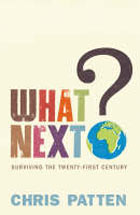
What Next? -by Chris Patten

Harga sebelum ongkos kirim: rp. 176,000

http://www.guardian.co.uk/books/2008/oct/25/politics1

At a time when a crisis is unfolding that will deflate American power irreversibly, the next US administration could be elected on the back of voters for whom denying women abortion choice and promoting creationism in schools are more important than the state of the world at large. To be sure, the financial crisis may allow American voters to overcome the drag of racism and elect Obama, despite his obvious intellectual superiority. But whatever the outcome, the leadership of the world's largest liberal democracy is not going to be decided by anything like rational argument, or by concern for problems that lie beyond America's shores.

  1. What Next?
  2. : Surviving the 21st Century
  3. by Chris Patten
  4. Allen Lane,
  5. £25
  1. Buy What Next? at the Guardian bookshop

The upcoming American election kept coming to mind as I read Chris Patten's What Next?. In many ways this is an extremely impressive book. It is a very long time since a leading British politician produced anything so ambitious, or as well written. The subject is nothing less than the global condition at the start of this century. Nuclear proliferation, global warming, oil production and the energy crisis, world poverty and the "bottom billion", the illegal drugs trade, immigration and human trafficking and the spread of epidemic diseases are all examined, with asides on Russia, China and practically every important development in world history since the Renaissance.

Patten is rightly scornful of some aspects of current political discourse: "You do not need to be a grammarian," he writes, "to know that you do not fight wars against common nouns but against personal ones. You fight a war against this or that country or enemy. Wars on drugs, wars on poverty, wars on waste - all these things are idle if grandiose ways of describing doomed political ventures." It is a crucial point, elegantly stated. But whoever wins the presidential election, the next administration is sure to want to ramp up America's bungling "war on terror", most likely by taking the failed Afghan campaign into Pakistan. Maybe the war on terror will simply implode, along with the American financial system. Certainly, the vast levels of military

expenditure of the past 20 years cannot be sustained. But it is hard to see the US, which alone among the countries engaged in Afghanistan still believes the war can be won, quietly departing the scene. A political solution is nowhere on the agenda. Even Obama has urged that US forces hunt down the Taliban by following them into Pakistan. If this happens America will have mired itself and the world in another intractable conflict, this time in an increasingly unstable state that is also nuclear.

Throughout his conspectus of global issues Patten is supremely confident that he knows what needs to be done. Despite occasional swipes at recent policies, What Next? is conventional wisdom of the most elevated kind and, like all versions of the genre, it avoids unmentionable realities. For example, while he discusses population growth in passing on several occasions - mostly in conjunction with a dismissive reference to Thomas Malthus - Patten at no point confronts the vast problems posed by the fact that human numbers will rise by around another 50% over the next half-century. Informing the reader that in the second millennium "the world's population increased 22-fold, while global domestic product went up 13 times as fast," he shows no hint of doubt that, as long as globalisation continues, this trend will also continue.

In failing to consider the possibility that there may be a human population problem Patten has plenty of company. He is at one with Marx, Hayek, Mao, the Pope, the Bush administration and many development economists. But is this near-universal denial of natural limits on human expansion well-founded? Or is it no more than a silly orthodoxy, like the faith of an earlier generation of bien pensants that central planning would create an economy of abundance?

An integral part of conventional wisdom is the conviction that all reasonable people subscribe to it, and this faith lies at the heart of Patten's view of the world. Stung by a rightwing commentator who, in response to his rather modest criticisms of the Iraq war, described him as a "liberal internationalist", Patten writes: "To my mind there is nothing else for a sensible person to be". Evidently, Patten thinks the same is true of most of the opinions aired in the book. At times - in his analysis of the Iraq war, for example - he is plainly right. What is questionable is his assumption that the thinking that led to the Iraq war will prove to be an aberration.

Patten begins What Next? by citing approvingly Margaret Thatcher's remark at her last cabinet meeting, "It's a funny old world." By the end of the book, however, it is clear that he sees the past eight years as a blip on the screen of history. Along with liberals across the world, he is confident that, with a new incumbent in the White House, what could be considered normal service will be resumed. "To live in a better world," he writes, "requires a more democratic citizenry, a sentiment inherent in Senator Obama's presidential campaign oratory." But what if the debacle on Wall Street leaves America fear-ridden, resentful and more stridently fundamentalist - whoever becomes president? It looks as if the future of the world is going to be funnier than Patten imagines.

Creating Magic: 10 Common Sense Leadership from a Life at Disney

Harga sebelum ongkos kirim: rp. 95,000

I flew through the advanced copy of Creating Magic: 10 Common Sense Leadership Strategies from a Life at Disney, which is a practical leadership guide for anyone looking to make his or her mark in the world of business. In fact, after reading it, I nearly wanted to get off my entrepreneurship ride and find myself inside of some large multinational corporation, just so I could have a chance to implement some of Lee Cockerell's suggestions. They're that good.

But the best part is that you don't have to be in middle or upper management to try out some of Lee's lessons. You can be your own boss, working an entry-level gig or climbing any and every ladder and still have a chance to better your own leadership skills.

The book is thick – well over 250 pages – and doesn't have slick graphics, charts or pull quotes that you're used to in most business books. Thus, the book itself is a commitment, which sort of mirrors leadership, if you think about it. But, it's worth getting through, even if a few suggestions seem redundant.

What makes the book a compelling read is when Lee draws on his own experience. He used to work at Marriott (as did I) and he shares tales of success and failure in his early years. And while I could picture myself in lobbies, kitchens and on guest floors whenever he described an instance of learning and leadership, you don't have to be a hospitality vet to be engaged by his story. After all, he spent the better part of his career with Disney, and most of us have been to the Magic Kingdom, or have at least seen "Aladdin" or "The Little Mermaid."

You'll understand why places like Disney are case studies in remarkability when you read Creating Magic. For a company that big to be that good for that long, great leaders have to be at the helm of every aspect of the operation. And, no matter which helm of which operation you may find yourself, Lee has some advice for you.

So, whether you’re running a nonprofit or a bank, a classroom or a marketing agency, Lee's reminders – while not ultimately revolutionary at every turn – are important keys for every leader to have in his or her pocket. (These are called 'common sense' strategies, after all.) And that's why the book was so enduring for me – I can always use the reminder that the best practice is often the most obvious or even the easiest.

Because if leadership is about anything, it's about consistent excellence.

Hot, Flat, and Crowded by Thomas L Friedman

harga sebelum ongkos kirim rp. 207,000

Why We Need a Green Revolution - And How it Can Renew America

http://www.thomaslfriedman.com/bookshelf/hot-flat-and-crowded

Thomas L. Friedman's no. 1 bestseller The World Is Flat has helped millions of readers to see globalization in a new way. Now Friedman brings a fresh outlook to the crises of destabilizing climate change and rising competition for energy—both of which could poison our world if we do not act quickly and collectively. His argument speaks to all of us who are concerned about the state of America in the global future.

Friedman proposes that an ambitious national strategy—which he calls "Geo-Greenism"—is not only what we need to save the planet from overheating; it is what we need to make America healthier, richer, more innovative, more productive, and more secure.

As in The World Is Flat, he explains a new era—the Energy-Climate era—through an illuminating account of recent events. He shows how 9/11, Hurricane Katrina, and the flattening of the world by the Internet (which brought 3 billion new consumers onto the world stage) have combined to bring climate and energy issues to Main Street. But they have not gone very far down Main Street; the much-touted "green revolution" has hardly begun. With all that in mind, Friedman sets out the clean-technology breakthroughs we, and the world, will need; he shows that the ET (Energy Technology) revolution will be both transformative and disruptive; and he explains why America must lead this revolution—with the first Green President and a Green New Deal, spurred by the Greenest Generation.

Hot, Flat, and Crowded is classic Thomas L. Friedman—fearless, incisive, forward-looking, and rich in surprising common sense about the world we live in today.

Saturday, September 19, 2009

The Partnership - A History of Goldman Sachs by Charles D Ellis

Harga Sebelum Ongkos Kirim: rp. 279,500

http://search.barnesandnoble.com/The-Partnership/Charles-D-Ellis/e/9781594201899

The inside story of one of the world's most powerful financial Institutions

Now with a new foreword and final chapter, The Partnership chronicles the most important periods in Goldman Sachs's history and the individuals who built one of the world's largest investment banks. Charles D. Ellis, who worked as a strategy consultant to Goldman Sachs for more than thirty years, reveals the secrets behind the firm's continued success through many life-threatening changes. Disgraced and nearly destroyed in 1929, Goldman Sachs limped along as a break-even operation through the Depression and WWII. But with only one special service and one improbable banker, it began the stage-by-stage rise that took the firm to global leadership, even in the face of the world-wide credit crisis.

Publishers Weekly:

In this history of investment bank Goldman Sachs, Ellis (Winning the Loser's Game) covers the same ground as Lisa Endlich's Goldman Sachs: The Culture of Success-with notable stylistic differences. From Marcus Goldman's purchase of his first commercial paper in 1869 to the firm's current success, Ellis's account is lively and engaging where Endlich's is accurate but dry. Ellis sheds light on events through dialogue and detailed descriptions of people's thoughts and feelings, embellishments that the author terms "recreations" in his epilogue. The effect of infusing such narrative techniques into the history of Goldman Sachs is entertaining, but it pushes the envelope of nonfiction, especially since the author appears to have interviewed only former partners of the firm. More damagingly, Ellis fails to report much about actual business, and attempts to do so-such as a chapter on Rockefeller Center financing-require lengthy digressions and are incomprehensible due to the complexities of the transactions. Without links to business, boardroom conflicts take on the air of petty squabbles. More a composite memoir of senior Goldman partners than a traditional history, this book will satisfy readers curious about the philosophies and personalities of the firm.

The Age of Turbulence by Alan Greenspan

Harga Softcover - rp. 103,200
Harga Hardcover - rp. 147,000
Belum termasuk ongkos kirim.


http://www.nytimes.com/2007/09/18/books/18leonhardt.html

Economist’s Life, Scored With Jazz Theme

Published: September 18, 2007

In 1944 a draft board in downtown Manhattan rejected Alan Greenspan, then a recent high school graduate, for military service because he had a spot on his lung that looked like it might be tuberculosis. So Mr. Greenspan, suddenly without a plan for the future, auditioned to play clarinet for the trumpeter Henry Jerome’s traveling big band.

Skip to next paragraph
J. Scott Applewhite/Associated Press

Alan Greenspan

THE AGE OF TURBULENCE - Adventures in a New World

By Alan Greenspan

Illustrated. 531 pages. The Penguin Press. $35.

He got the job, but he was never a star. He was a sideman rather than a soloist. Among his fellow musicians he became known as the band’s resident intellectual, the clarinetist who could also fill out his bandmates’ income tax forms for them. Between sets, when they disappeared into the green room — “which would quickly fill with the smell of tobacco and pot,” Mr. Greenspan recalls — he read books about business.

The pattern repeated itself, albeit in a more sober form, after the war ended and he began studying economics at New York University. Many of his classmates were swept up by grand questions relating to the new economic order, but Mr. Greenspan was more interested in numbers and equations. “I still had the sideman psychology,” he writes in his memoir, “The Age of Turbulence.” “I preferred to focus on technical challenges and did not have a macro view.”

His macro view wouldn’t come until the 1950s, when his first wife introduced him to Ayn Rand’s New York salon. Rand — whom he calls “quite plain to look at” but “a stabilizing force in my life” — pushed him to think beyond mathematics and helped turn him into a libertarian.

By the time President Ronald Reagan named Mr. Greenspan to run the Federal Reserve in 1987, he had already a lived a full, fascinating, Zelig-like life. For years he was the quietly influential man off to the side. With his book he finally lets us know what he was thinking.

For a memoir from such a high-profile figure, it is surprisingly frank. Large parts of the book are downright entertaining. Its biggest failing — the reason it isn’t a great memoir — is Mr. Greenspan’s reluctance to be as forthright and penetrating about himself as he is about others.

Born in 1926, he was raised in Washington Heights, the only son of parents who soon divorced. He attended George Washington High School a few years behind Henry Kissinger (and a few decades before the baseball stars Rod Carew and Manny Ramirez, a historical oddity that Mr. Greenspan, who still remembers Joe DiMaggio’s 1936 batting average, probably appreciates). Before joining the Jerome big band, he played in the same informal ensemble as Stan Getz. At Columbia University, Arthur Burns, himself a future chairman of the Fed, became Mr. Greenspan’s graduate-school adviser.

Like his father, a stockbroker, Mr. Greenspan eventually made his way to Wall Street, where he ran a consulting business that forecast the economy. He was doing quite nicely there when Martin Anderson, another Rand acolyte, asked if Mr. Greenspan wanted to join Richard M. Nixon’s 1968 presidential campaign.

Except for Jimmy Carter, Mr. Greenspan has worked with every president since 1969, and the book offers a fairly blunt critique of each. Gerald Ford, who’s portrayed as an unusually decent politician, clearly ranks first. “He always understood what he knew and what he didn’t know,” Mr. Greenspan writes.

Despite their ideological differences, Bill Clinton seems to place second, thanks to his “consistent, disciplined focus on long-term economic growth.” At one point, with urging from Newt Gingrich, the House speaker, Mr. Greenspan called Rush Limbaugh to argue for the Clinton administration’s Mexican loan guarantees. Mr. Greenspan even shares some of the credit for his signature insight — recognizing early on that technology was transforming the economy — with Mr. Clinton.

Nixon, Reagan and George H. W. Bush each receives a mix of praise and criticism. Only the current President Bush goes without receiving credit for a single significant accomplishment.

“The Age of Turbulence” is really two books, one of which I suspect Mr. Greenspan preferred writing and one of which he understood his audience would prefer reading. The second half — the typically Greenspan half — is a series of meditations on economic issues, like income inequality and the rise of China.

The first 250-odd pages are a standard autobiography, and Mr. Greenspan confesses in the acknowledgments that learning to write in the first person was a struggle. For all of the book’s candor, this is a struggle he does not quite win. This first half of the book is utterly readable, but it lacks a narrative core. It’s telling that the book opens on Sept. 11, 2001, with Mr. Greenspan on a plane flying home from Switzerland that gets rerouted. This is supposed to serve as drama.

Mr. Greenspan also doesn’t really let readers inside his life. He laments that Nixon’s televised announcement of price controls in 1971 pre-empted “Bonanza” — “a show I loved to watch” — and he calls his wife, Andrea Mitchell, “very beautiful.” But he does not easily admit error. He does not even confess to having his own ambitions. He seems to want people to believe that he accepted his fantastic ascent with reluctance.

Yet, perhaps accidentally, he has still managed to create a lasting image of himself. He never seems happier than when poring over economic indicators that allow him to predict everything from the 1958 steel recession to the 1990s boom. “My early training was to immerse myself in extensive detail in the workings of some small part of the world and to infer from that detail the way that segment of the world behaves. That is the process I have applied throughout my career,” he writes.

He lacks the same sure footing when confronting the great political issues, and even the economic ones, of the last few decades. He provided the critically influential voice in support of the current administration’s tax cuts, for instance, but he now disowns them. He worries that the backlash to globalization could create a “truly serious economic crisis,” but his proposed remedies — like higher pay for math teachers — don’t seem up to the task.

Despite Rand’s tutoring he never quite escapes the sideman’s psychology. Now, there should be no shame in that. Mr. Greenspan may have had a better feel for the ups and downs of the postwar American economy than anyone else, and he put his talents to good use as a central banker. The question that lingers is why the rest of us allowed him to be treated as something much more.